

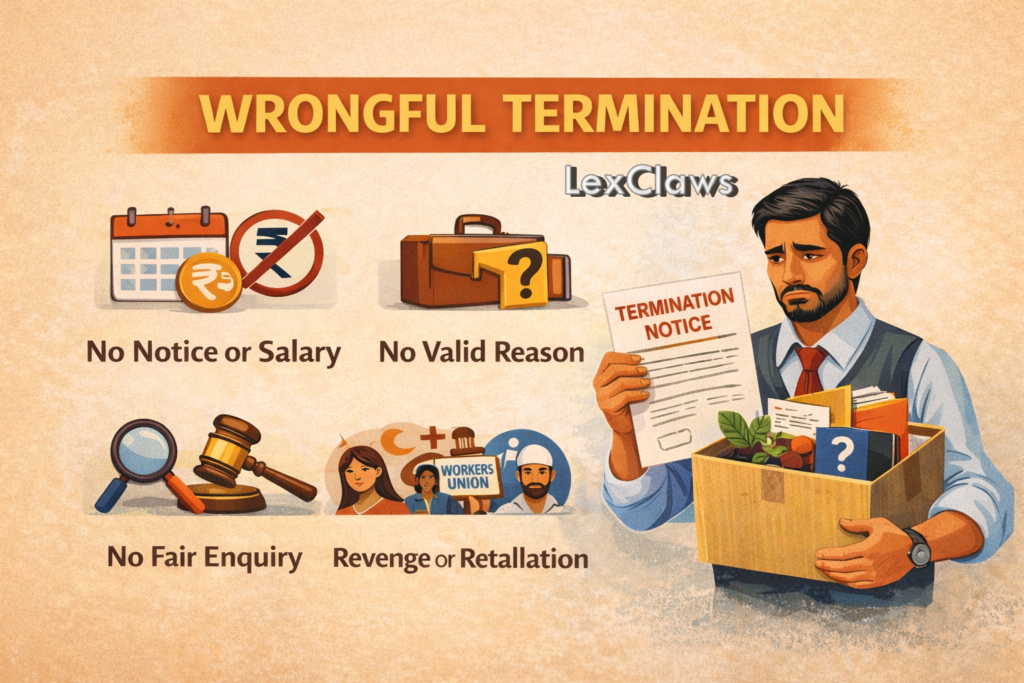
Wrongful termination means removing an employee from a job unfairly or illegally.
It happens when a company fires an employee without following Indian labour laws, without following the job contract, or without giving a fair chance to the employee.
In simple words, if a company ends your job without proper reason or proper process, it can be wrongful termination.
Simple Meaning of Wrongful Termination
Wrongful termination occurs when:
- An employee is fired without a valid reason, or
- The company does not follow the rules, laws, or agreement while terminating the employee
Common Situations Where Termination Is Wrongful
An employee’s termination may be wrongful in these cases:
1. Fired Without Notice or Salary
- The company does not give:
- Required notice period, or
- Salary instead of notice, as mentioned in the appointment letter or law
2. Fired Without Proper Reason
- No misconduct
- No poor performance
- No genuine business reason
- Fired due to personal dislike or unfair decision
3. Breaking the Job Contract
- Termination goes against:
- Appointment letter
- Company rules
- Service conditions agreed earlier
4. No Fair Enquiry for Misconduct
- Employee is accused of wrongdoing but:
- No enquiry is conducted
- No chance given to explain or defend
5. Fired as Punishment or Revenge
- Termination because the employee:
- Complained about harassment
- Reported illegal activities
- Took maternity leave
- Joined a workers’ union
6. Discriminatory Termination
- Employee is fired due to:
- Gender
- Pregnancy
- Religion
- Caste
- Disability
Laws That Protect Employees in India
Different laws apply depending on the type of job:
🔹 Industrial Disputes Act, 1947
- Applies mainly to workers and factory employees
- Termination is illegal if:
- No notice or compensation is given
- Termination without following due process.
- Possible relief:
- Job reinstatement
- Back wages or compensation
🔹 Shops and Establishments Act (State-wise)
- Covers most private office employees
- Employer must:
- Give notice
- Give valid reason
- Follow proper procedure
🔹 Maternity Benefit Act, 1961
- Firing a woman during maternity period is illegal
🔹 Indian Contract Act, 1872
- If the employer breaks the job agreement, the employee can claim compensation
Who Can Take Action for Wrongful Termination?
- Factory and industrial workers (factory, industrial, clerical, technical staff)
- Office and private company employees
- Contract employees (as per contract terms)
- Probation employees (if termination is unfair or dishonest)
What Can an Employee Do? (Remedies Available)
An employee can:
✔ Send a legal notice to the company
✔ Approach the Labour Commissioner
✔ File a case in Labour Court or Tribunal
✔ Ask for job back, compensation, salary dues, or damages.
Difference Between Legal and Wrongful Termination
| Legal Termination | Wrongful Termination |
| Follows law and rules | Violates law or contract |
| Proper notice given | No notice or pay |
| Proper reason | Unfair or biased reason |
Important Point to Remember
In India, companies cannot fire employees freely.
They must follow rules, give reasons, and act fairly.
